
Forward Operating Base Flathead (1 of 2)
Part one of a two-part series comparing how Forward Operating Bases in combat zones compare to Indian Reservations in America today. Part one is tame, part two will make you angry.

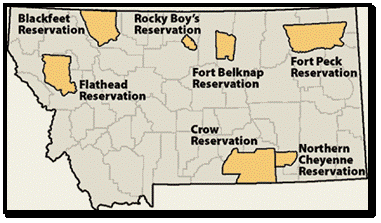
WE ARE WELL BEYOND ARGUING ABOUT WHO WAS HERE FIRST
The purpose of a Forward Operating Base in a combat zone is to establish a secure, defensible position from which to provide sustained and responsive fire support, enable maneuver operations, and extend operational reach within the assigned area of operations. The fire base serves to deter and disrupt enemy activity, protect friendly forces and critical assets, and maintain freedom of movement. Additionally, it functions as a hub for command and control, coordination, logistics, and force protection, ensuring continuous operational effectiveness and support of mission objectives.
The map below depicts how FOBs were arrayed around Afghanistan in 2011. I was in Afghanistan in 2011 and responsible for planning FOB reductions.
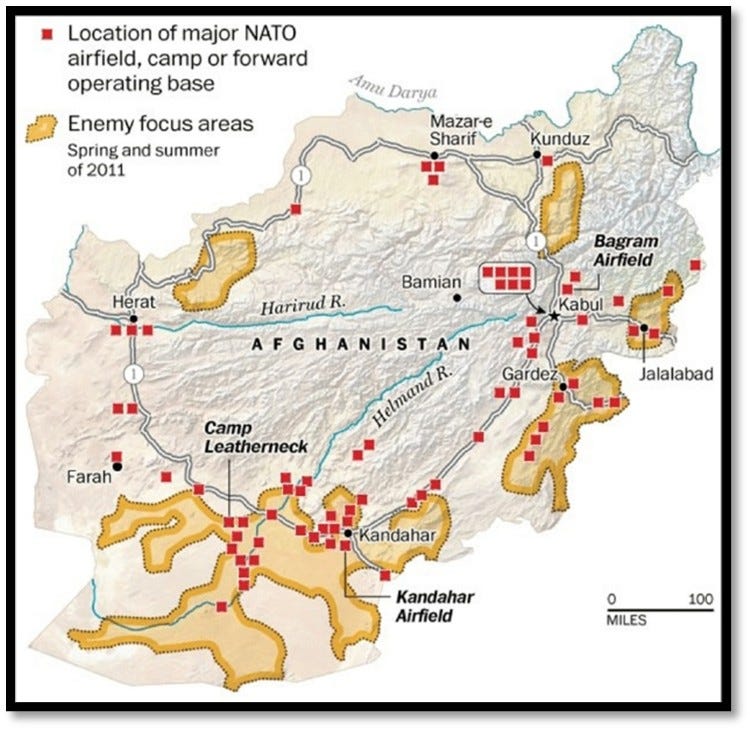
At first glance, Forward Operating Bases (FOBs) in Afghanistan and American Indian reservations in the United States appear to have little in common. One is a temporary military installation in a foreign war zone; the other is a legally defined homeland for Indians within the United States. Yet when examined through the lenses of geography, governance, control, and purpose, certain parallels emerge. Both systems created spaces of isolation, imposed forms of authority from outside the community, and produced unique social and economic environments shaped by those conditions. At the same time, important differences in purpose, sovereignty, and permanence distinguish the two. For my purposes, I will not yet discuss how the Flathead Indian Reservation is shared with other Montana residents.
Geographic Isolation and Strategic Placement
Both FOBs and reservations were often located in geographically marginal or isolated regions. Forward Operating Bases in Afghanistan were typically established in remote valleys, desert plateaus, or rugged mountainous terrain. These locations were chosen for tactical reasons—proximity to insurgent activity, defensibility, and the ability to project military power into surrounding areas. Isolation was frequently a feature rather than a flaw. A base situated in a remote valley might control a key road network or provide surveillance over a contested district.
Similarly, many American Indian reservations were established in areas that the United States government considered undesirable for settlement by growing populations. In the nineteenth century, tribes were frequently forced onto lands far from fertile agricultural zones or major transportation routes. Reservations in places such as the Great Plains, the desert Southwest, or remote mountain regions often reflected the federal government’s goal of separating Indian populations from expanding settler communities.
In both cases, geography shaped daily life. Isolation affected supply chains, economic opportunities, and cultural development. FOBs relied heavily on long supply lines to bring in food, fuel, and equipment. Reservations, especially in their early years, relied on federal rations and limited trade networks. In each context, communities learned to adapt to environments defined by distance and scarcity.
Systems of External Authority
Another parallel lies in the structure of authority governing these spaces. Forward Operating Bases were controlled by military command structures that operated according to strict hierarchies and rules. Soldiers stationed at a FOB lived under regulations governing movement, security, and interaction with the surrounding population. The base itself functioned as a controlled environment designed to maintain discipline and operational readiness.
American Indian reservations historically experienced a comparable system of external oversight, though in a very different context. During the nineteenth and early twentieth centuries, the federal government administered reservations through the Bureau of Indian Affairs (BIA). Federal agents often exercised significant authority over tribal governance, economic activity, and movement. At times, Indian people needed permission to leave reservations or engage in certain forms of commerce.
The presence of external authority created tensions in both environments. Soldiers on FOBs operated within rules that sometimes limited their ability to interact freely with local Afghan communities. Indian tribes on reservations frequently resisted federal policies that restricted traditional governance and cultural practices. In both cases, individuals lived within structures imposed by institutions beyond their immediate control.
Economic Structures and Dependency
Economic life within FOBs and reservations also demonstrates interesting parallels. A Forward Operating Base functioned as a self-contained economy built around military supply systems. Food, equipment, and materials arrived through coordinated logistics operations. Contractors, local laborers, and military personnel participated in a micro-economy tied to the base’s operational needs.
Reservations developed their own internal economies as well, often influenced by federal policies. In the nineteenth century, many reservations depended on government-issued rations and supplies following the loss of traditional hunting or agricultural lands. Over time, reservation economies diversified to include ranching, resource development, tourism, and tribal enterprises such as gaming operations.
Both environments, therefore, featured forms of economic dependency. FOBs relied entirely on outside logistical support to function. Reservations historically relied on federal funding and oversight, though many tribes have increasingly pursued economic independence through tribal governance and enterprise.
Cultural Adaptation and Community Formation
Life inside a Forward Operating Base required individuals to adapt to a tightly structured community environment. Soldiers lived in close quarters, often under stressful conditions. The shared experience of deployment created strong social bonds and distinct cultural practices—from informal rituals to humor and language unique to military life.
Reservations likewise became centers of cultural adaptation and resilience. Despite historical pressures to assimilate, many tribes preserved languages, traditions, and governance systems within reservation boundaries. These communities became places where Indian identity could persist and evolve in response to changing political and economic circumstances.
In both settings, isolation fostered unique subcultures. FOBs developed their own rhythms of life—patrol schedules, communal dining facilities, and improvised recreation. Reservations developed cultural institutions such as powwows, tribal schools, and councils that helped sustain community cohesion.
Security and Boundary Control
A defining characteristic of Forward Operating Bases was security. Perimeter walls, guard towers, and checkpoints controlled entry and exit. These defensive measures reflected the installation’s military purpose and the dangers posed by conflict zones.
Reservations historically had different but related forms of boundary control. While not designed as defensive military installations, reservations were legally defined territories with recognized borders. Federal authorities sometimes restricted movement onto or off reservation lands, particularly during earlier periods of U.S. policy when controlling Indian populations was a priority.
The concept of a defined boundary separating one social or political space from another, therefore, appears in both systems. Within the boundary, a community operated under specific rules and governance structures distinct from the surrounding environment.
Key Differences
Despite these similarities, important differences make the comparison incomplete if taken too far. The most significant difference lies in purpose. Forward Operating Bases were temporary military installations designed to support combat operations. Their existence depended on strategic necessity and typically ended when missions concluded.
Reservations, by contrast, are permanent homelands for domestic dependent “sovereign” tribal nations. While they were often created through historical processes, they represent recognized territories where tribes exercise varying degrees of self-government. Tribal governments today manage education, law enforcement, cultural preservation, and economic development within reservation boundaries.
Another major distinction is population composition. FOBs were primarily populated by military personnel serving short-term deployments. Reservations are long-standing communities with families, cultural institutions, and generational continuity.
Finally, sovereignty separates the two systems. Tribes possess a recognized political status within the United States as domestic dependent nations. Forward Operating Bases have no comparable political identity; they are extensions of military authority rather than self-governing communities.
Conclusion
Comparing Forward Operating Bases in Afghanistan to American Indian reservations reveals intriguing parallels in geography, authority, and community adaptation. Both environments involved isolated spaces governed by external structures and shaped by logistical dependency. Residents of each developed distinctive social and cultural patterns within those constraints.
Yet the comparison also highlights profound differences. FOBs were temporary outposts of military power, while reservations are enduring homelands for Indian nations with deep historical roots and evolving systems of self-governance.
Ultimately, the comparison is most useful not as a claim of equivalence but as a way to reflect on how institutions create bounded spaces that shape human experience. Whether a military base in a remote Afghan valley or a reservation on the American plains, the organization of territory, authority, and community profoundly influences how people live, adapt, and define their identities within those spaces.
This is part one of a two-part series. This first part is a generic comparison of FOBs and Indian Reservations. In part two, I will break down how reservations in America act like FOBs in combat zones.
Here is a hint:
They are “secure, defensible positions” from which to provide or enable:
1. Maneuver operations.
2. Extended operational reach within the assigned area of operations.
3. The disruption of “enemy” activity.
4. The protection of “friendly forces” and critical assets.
5. Freedom of movement.
6. Command, Control, Coordination.
7. Logistics.
8. Force protection.
Thereby ensuring continuous operational effectiveness and support of mission objectives. I will describe their mission objectives and how they operate as a hostile force to America today.
As a source of mine recently stated, “It is definitely an insurgency. I have said that their efforts to become a ‘sovereign nation’ while at the same time being American citizens since 1924 make them secessionists.”
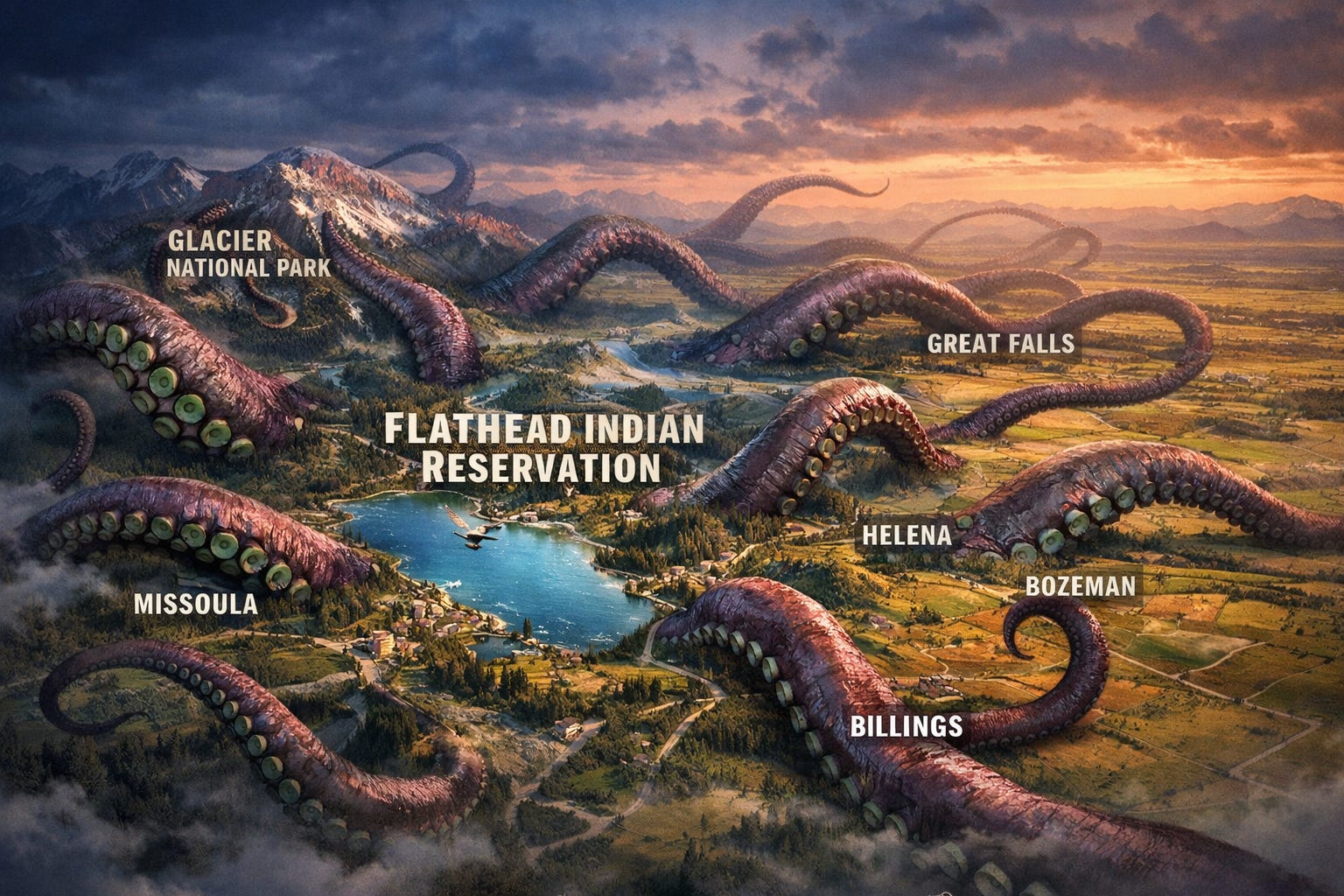
Perfect article and precient as another issue correspondes with this in specifics.
Sent snail note confirming National operation, and water transfer program, and need to stop same. from success. Know Montana 1993-4 meeting, who lives in Montana.